
Start with the material
Look at the resin label before choosing a lamp. The material must be designed for UV curing, and its recommended wavelength must match the light. Ordinary two-part epoxy follows a different curing process.
A bigger wattage number alone does not tell you how a resin will behave. Light reaching the piece, working distance, layer depth, and the resin formula all matter.
Think about the shape of your work
For small pendants and jewelry, a compact lamp may be all the work surface you need. Clear molds allow light to reach more of a piece; opaque molds, deep pours, and heavy pigment make exposure more challenging.
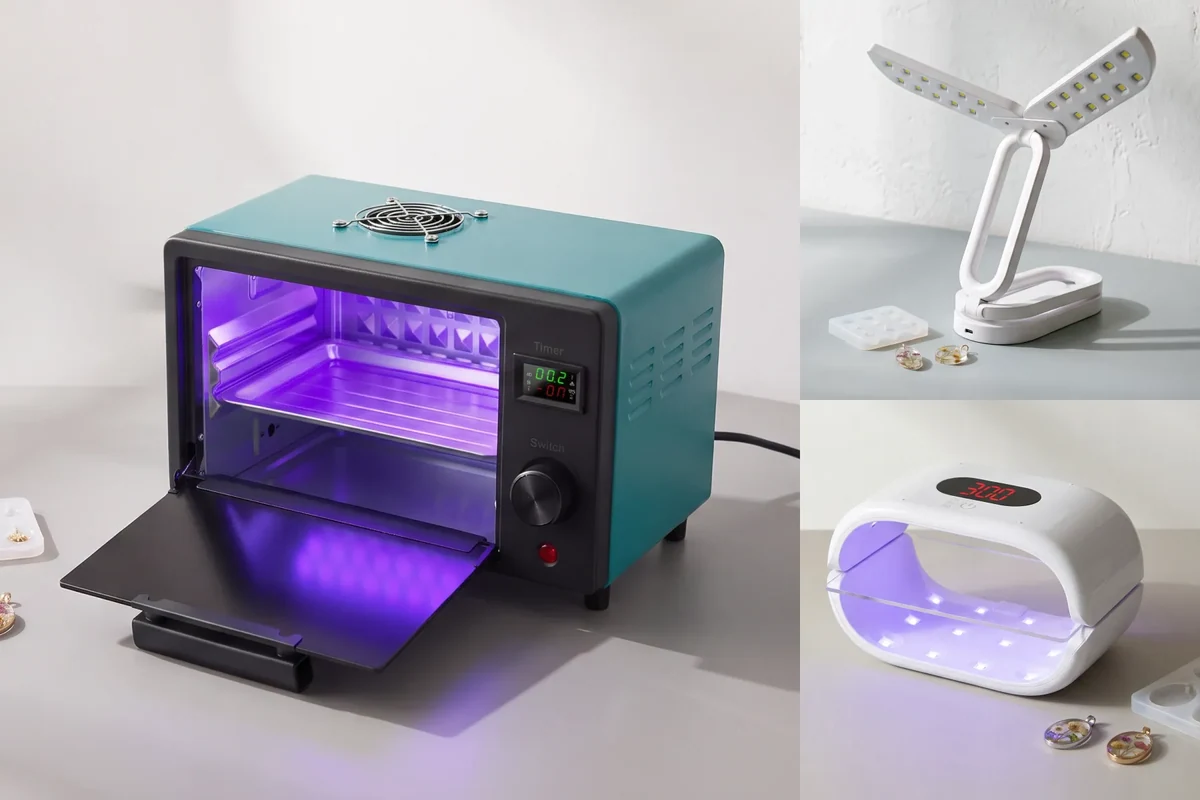
If you make regularly in the same space, a curing box creates a dedicated station. An articulated or tripod-mounted lamp provides an overhead arrangement for compatible projects.
Let your workspace help you choose
A folding rechargeable lamp suits a table that changes jobs during the day. A double-sided lamp offers top and bottom light for small pieces. Stand-mounted lights need enough room for a stable base and a clear working area.
Check the product listing and supplied instructions for package contents, setup, and power requirements before purchasing.
Make your first session a test
Use a small amount of your chosen resin and follow the material maker's starting instructions. Record the lamp position and exposure time, then inspect the piece after it cools.
Use the protective equipment and ventilation recommended for your materials. Avoid direct exposure to UV light and keep uncured resin away from skin.