
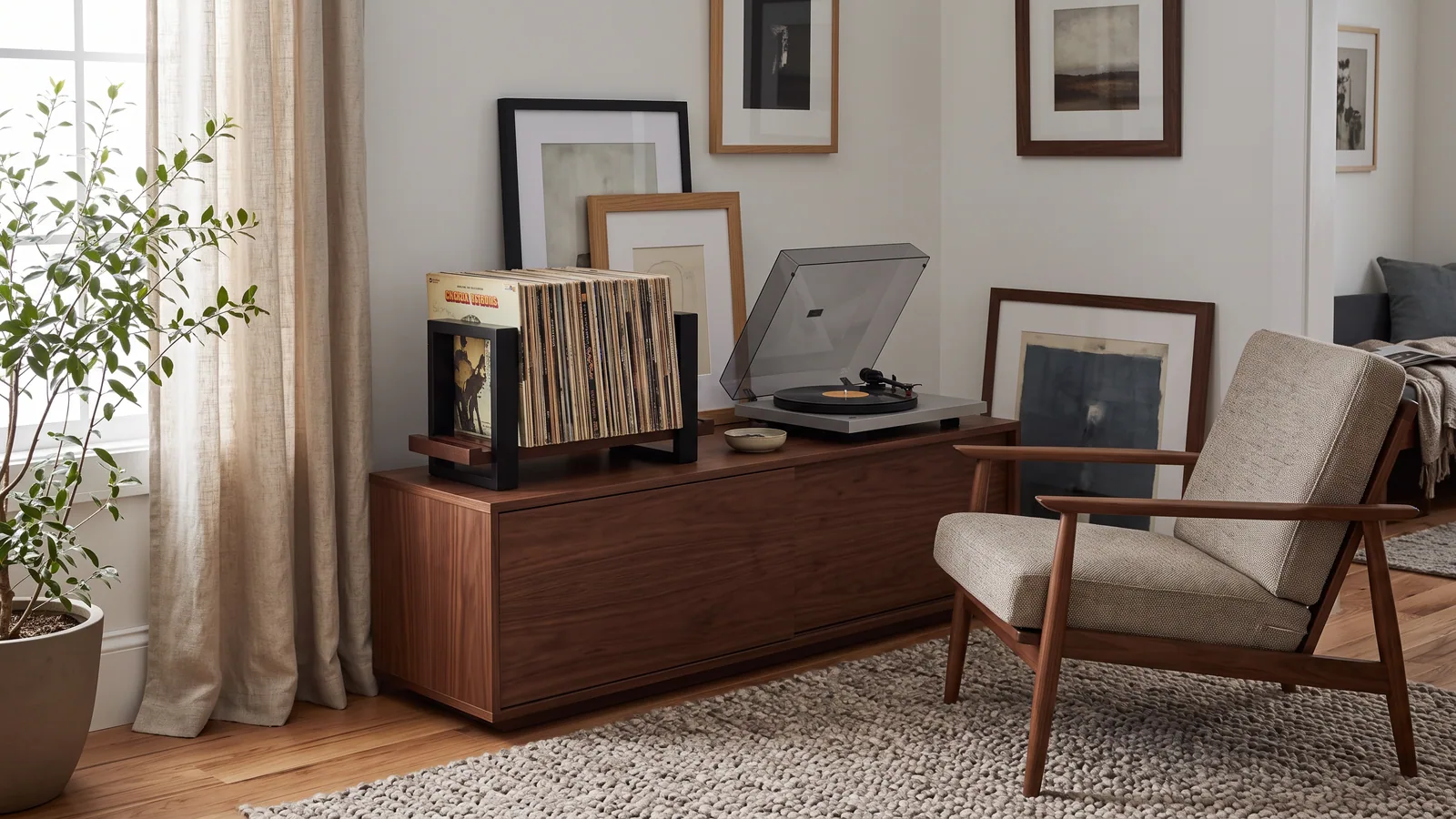
 Illustrative scene
 Shared spaces
Living rooms, entryways, and dining areas work best when everyone can understand where things belong and the room can adapt without a complicated reset.
A practical approach
Make shared rooms easier to read, use, and restore.
Give movement a clear path
Notice the route from the door to the seating area. Keep it free of bags, cables and furniture corners so the room is comfortable to cross.
Create visible landing zones
A hook for outerwear and a small spot for keys can be easier to use than storage in another room. Place them near the point of arrival.
Let the room change roles
Keep at least one surface open for a conversation, a meal or a project. A shared space feels calmer when it can change without a complete reset.
In practice
Follow the path people already take.
Imagine arriving home with a bag, keys and a jacket. Where do they go first? If the answer is “wherever there is space,” the most useful change may be a single landing zone close to the door, not another large piece of furniture.
The same idea works in a living room. Keep the things used together near each other: records beside the player, a book beside a chair, a tray near the seat. Leave the route across the room open so the setup still works when more people are there.
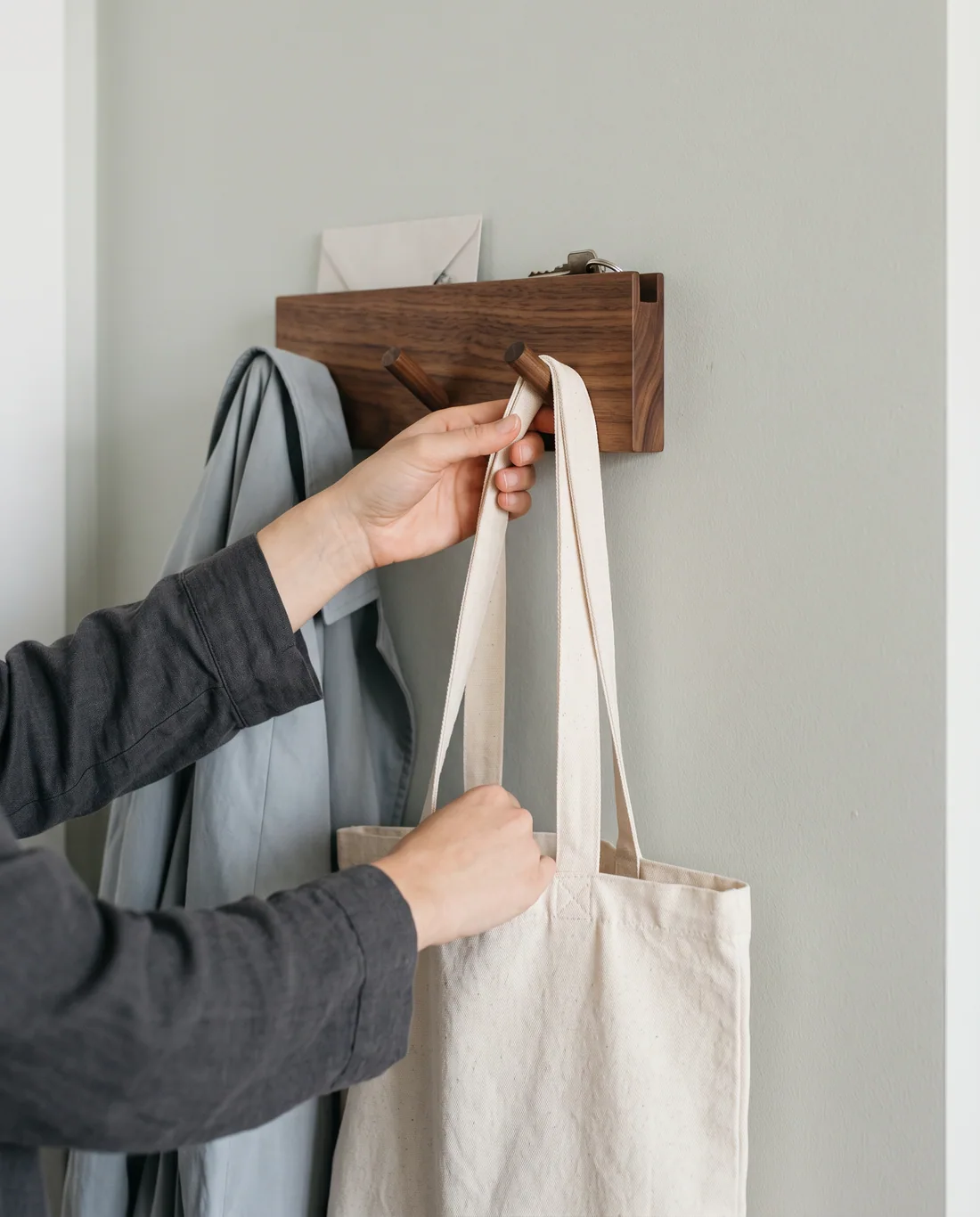
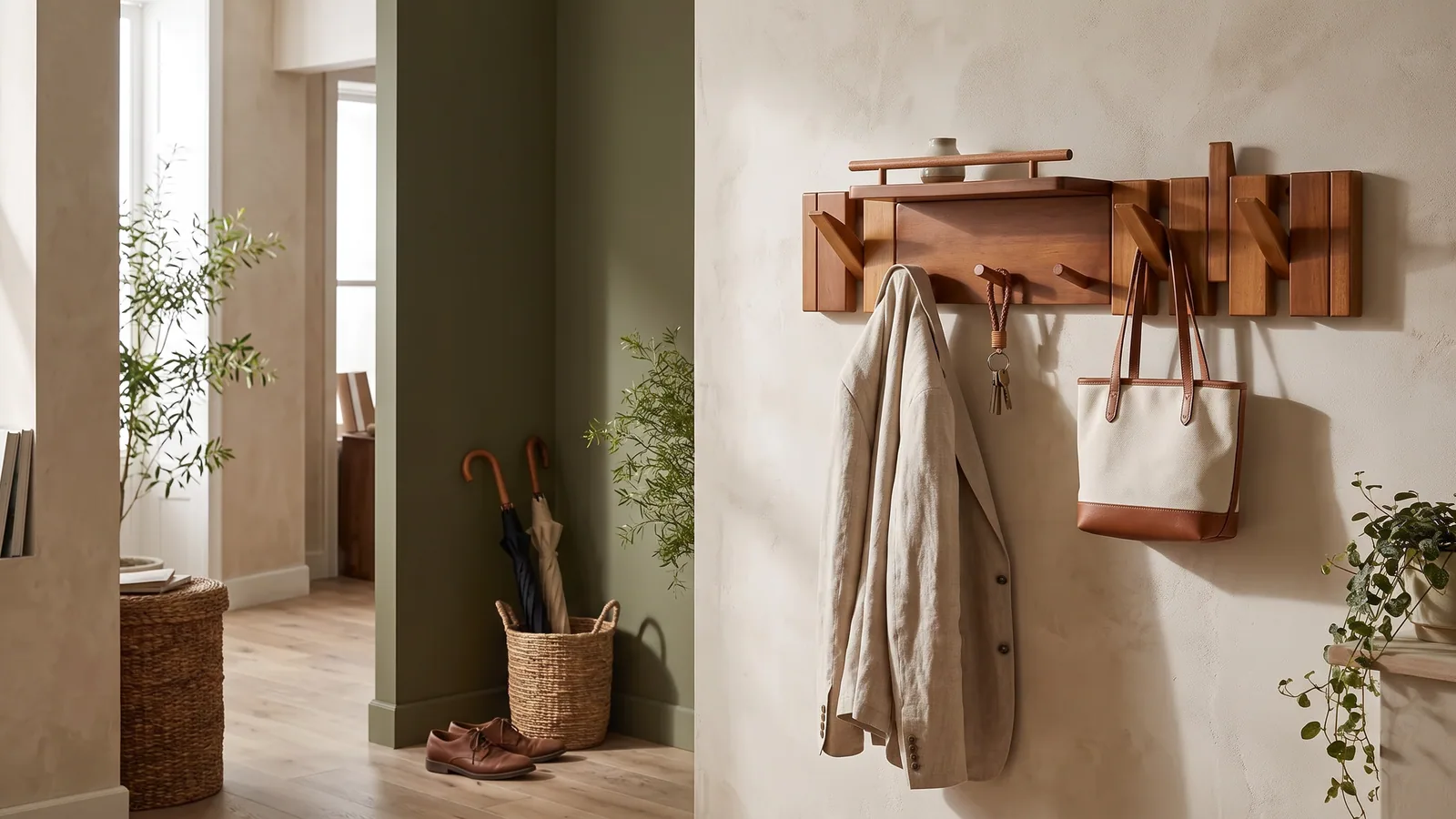
A shared space feels calm when its organization is obvious enough that no one needs special instructions to use it.
Try it at home
A simple starting checklist.
- Walk the normal path through the room before moving furniture.
- Put storage close to where an item is usually dropped.
- Group related objects instead of spreading them across the room.
- Keep one shared surface available for changing activities.
- Use labels or consistent containers only where they reduce confusion.