
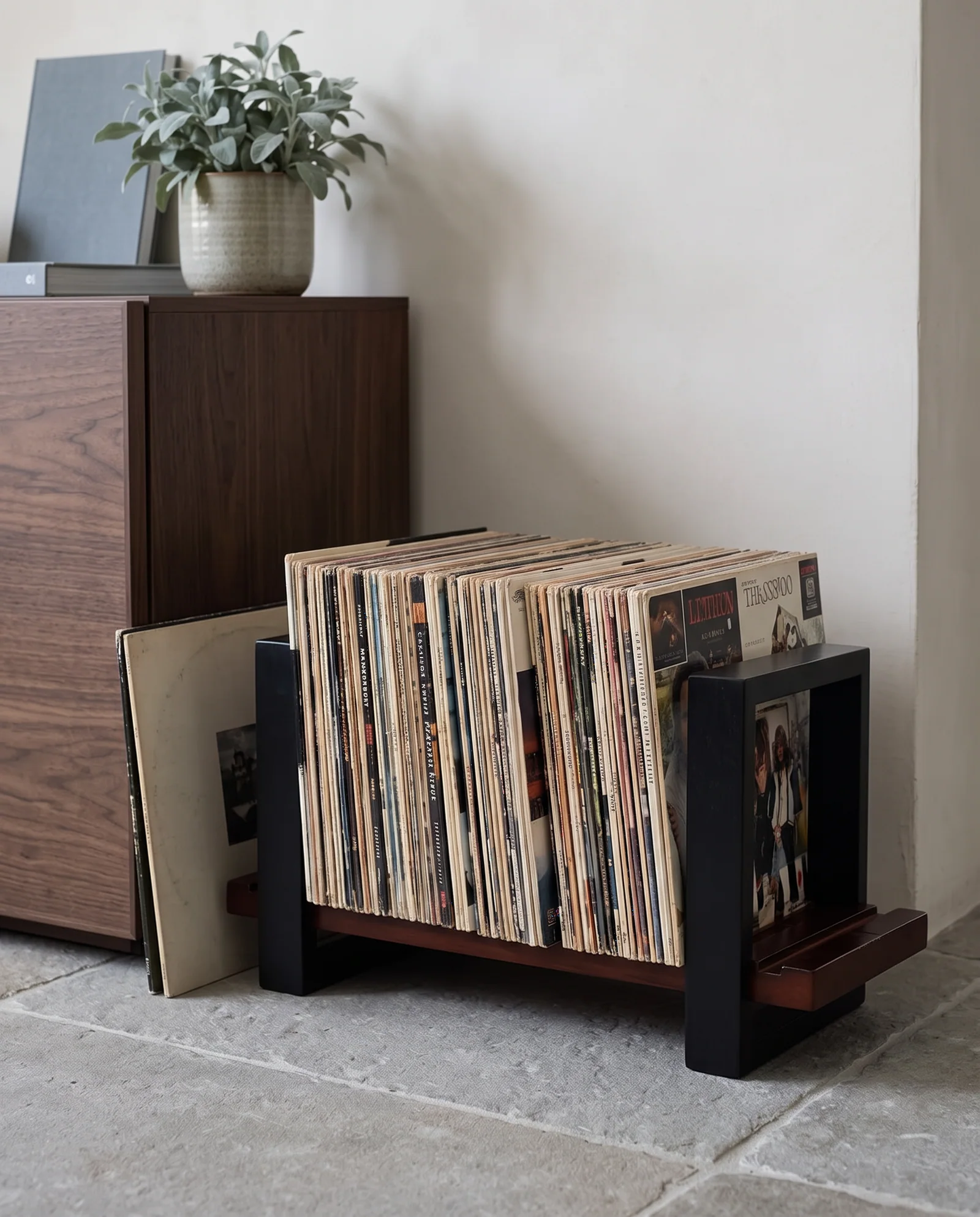
 Illustrative scene
 Considered materials
Materials shape how a room feels before any decoration is added. Wood grain, soft textiles, glass, and matte surfaces can work together when their roles are clear and repeated with restraint.
A practical approach
Let a few honest materials carry the character of the room.
Repeat tone, not perfection
Two woods can work together without being identical. Compare their undertones in daylight and repeat one of them in a small detail.
Balance hard and soft
Use a textile, a book or a plant beside more structured wood and metal pieces. Texture often adds warmth without another color.
Design for care
Consider how often a surface will be touched or wiped down. The best-looking finish is one that also suits the way the room is used.
In practice
Look at the materials already in the room.
Before bringing in a new finish, notice the things you touch most often. Is the floor pale or dark? Are the large surfaces matte? Does a favorite chair bring in woven texture? Let one of those existing cues guide the next addition instead of trying to match every object exactly.
For example, a darker metal frame can give structure to warm wood, while a linen throw softens both. In a small corner, repeating just one tone or texture can be enough to make separate objects feel like they belong together.
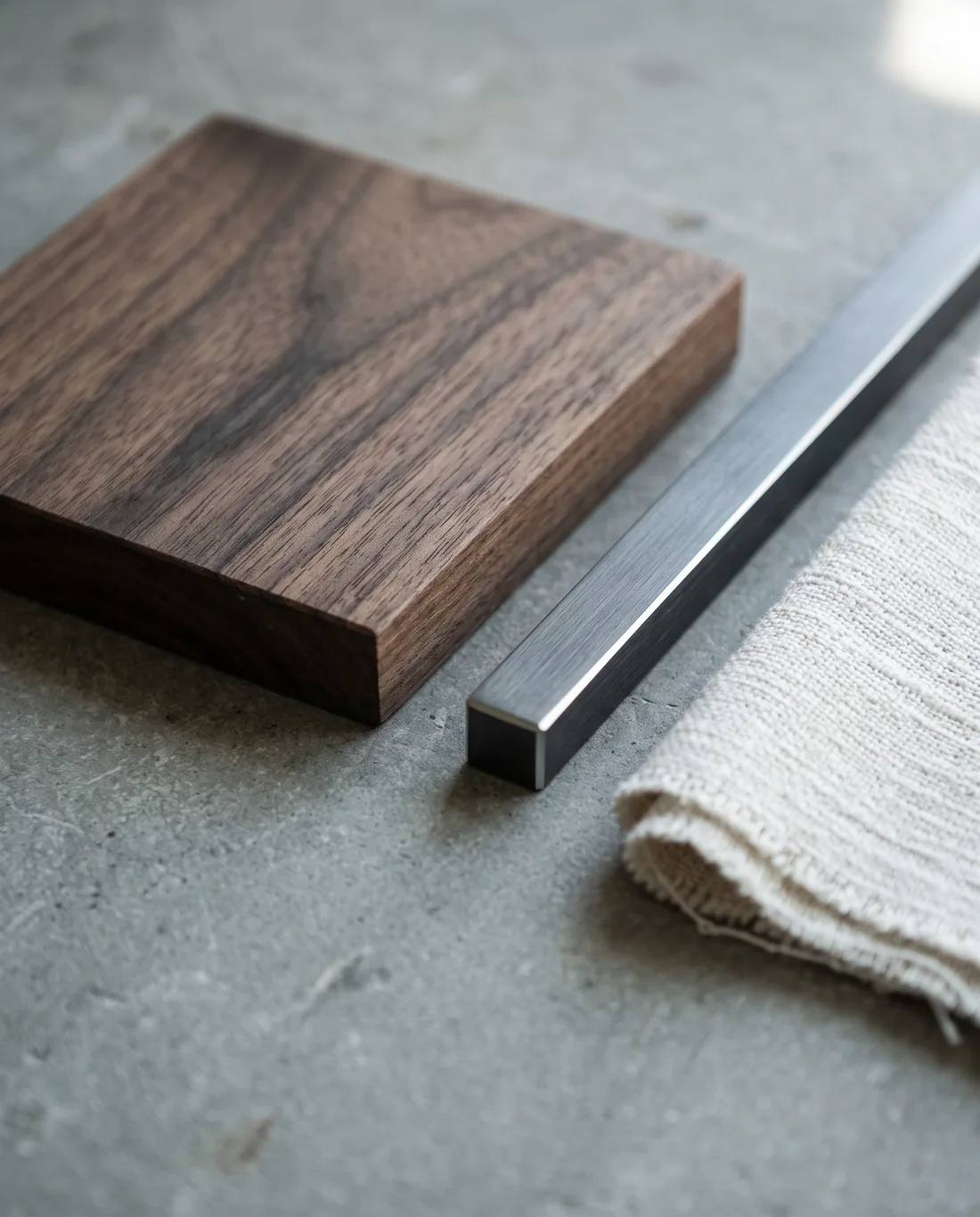
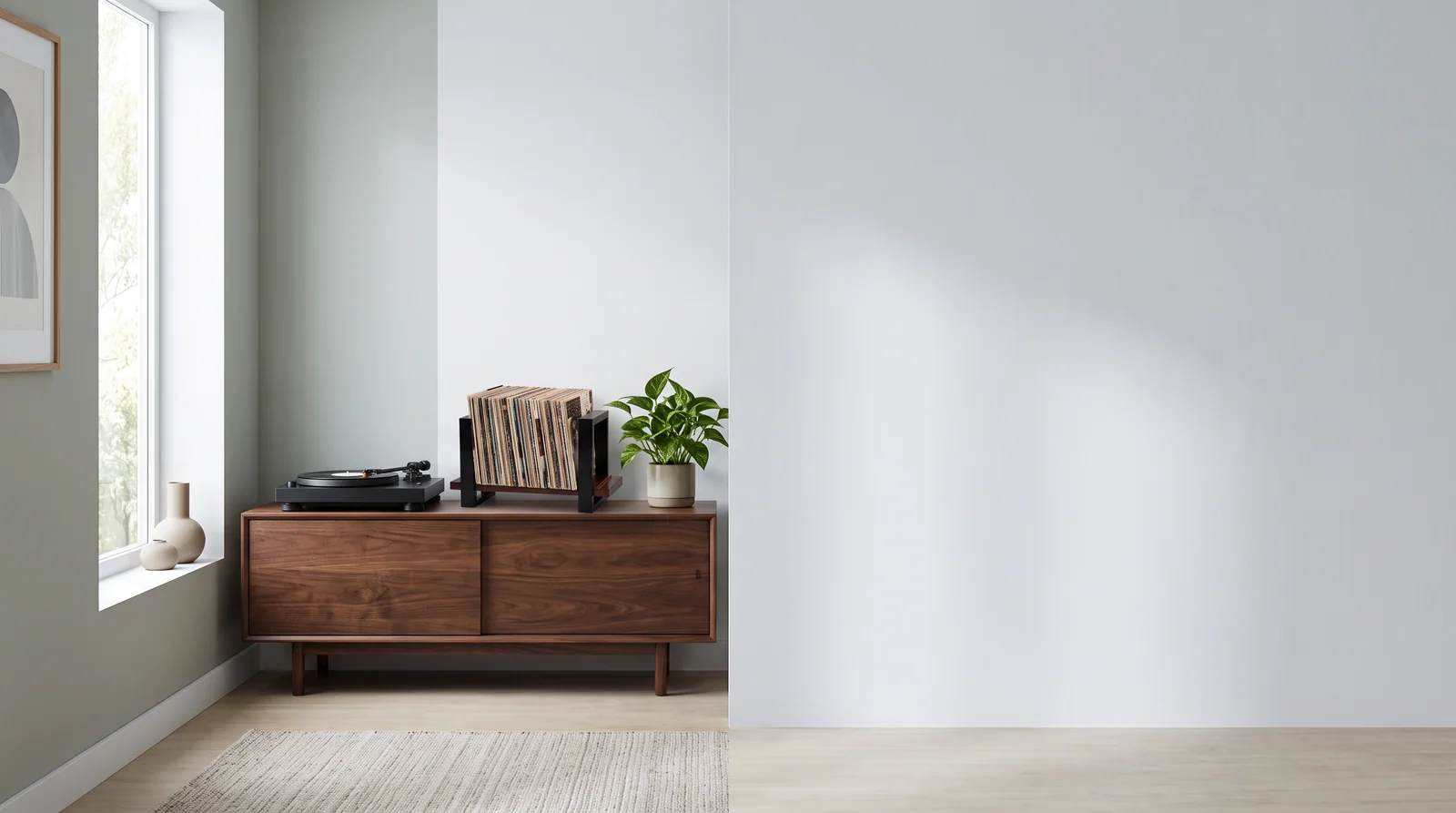
A considered material palette feels connected rather than matched. The result should support use first and atmosphere second.
Try it at home
A simple starting checklist.
- Choose one dominant material and let the others support it.
- Compare finishes in the actual room light before adding more.
- Use texture to create contrast when the colors are similar.
- Keep frequently touched surfaces straightforward to maintain.
- Allow natural grain and small variations to remain visible.